Everything in Its Fold: The British Jewellery Case, Reconsidered
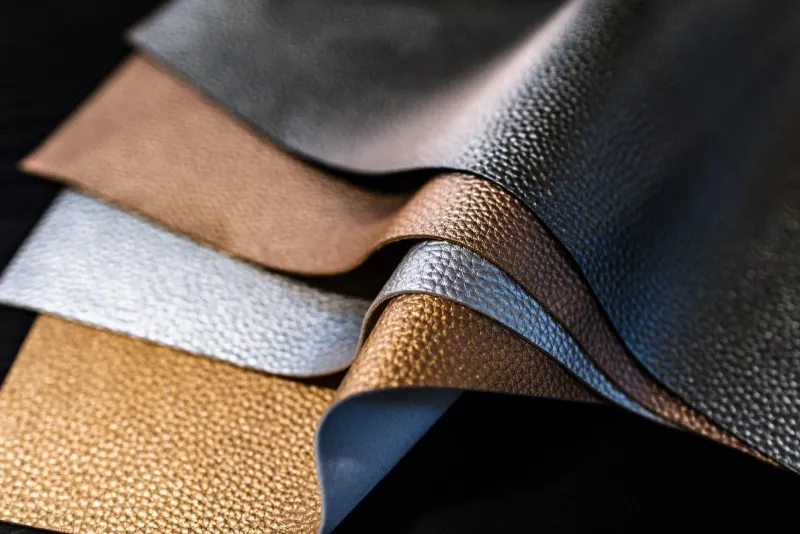
Photo: leather jewellery travel roll case open with necklaces on table, via www.riwick.com
A jewellery case is bought in a hurry and used for twenty years. It is chosen in an airport, or received as a gift, and then it shapes everything that follows: what travels, what tangles, what stays behind, and — over time — what gets bought. The object is small, and its influence is not.
The case as a design problem
Consider what a good one must do. It must hold chain without permitting it to knot itself into a puzzle. It must cushion a stone against the geometry of a weekend bag. It must close without pressing a clasp into a neighbouring surface. It must be light enough to justify its place in hand luggage and rigid enough that its contents do not find the corners.
Most cases fail on one of these and succeed on none. The failures are specific and worth naming, because they are the same in a £30 pouch and a £300 roll: a lining that grips rather than slips, hooks that sit on the same plane as chains, and a size that has been chosen for the shelf rather than the bag.
Four tests worth applying in the shop
Anti-tangle design. Look for individual channels, poppered loops or a divided interior. A single shallow compartment will knot two fine chains within a car journey.
Lining. Anti-tarnish treated fabric — the trade-marked linings used by the long-established houses are the reference point — slows the sulphur-driven dulling that affects silver. Suede and velvet are kind to polished surfaces but hold dust. Untreated microfibre is the weakest of the three.
Size discipline. A roll should fold to roughly the footprint of a paperback. Anything larger will be left at home, and a case left at home protects nothing.
Weekend-bag behaviour. Press the closed case against the side of your hand luggage in the shop. If the zip runs against a rigid edge, or the whole thing bows, it will transfer that pressure to a clasp.
The shelf, surveyed
The flat roll
The traditional travel roll remains the most efficient design for chains and earrings: a flat panel, a series of loops, a flap that folds twice. Wolf 1834, founded in London and still trading on that heritage, produces flat rolls with its treated lining and a fastening that does not require dexterity at six in the morning. Smythson's small leather travel cases take the opposite approach — minimal interior, excellent leather, and a price that assumes you will look after it.
The zip case
The semi-rigid zip case is the more forgiving option for anyone travelling with a watch, a bracelet and a ring in the same compartment. Aspinal of London and Ettinger both work in this register: British leather, restrained hardware, a lining that is pleasant rather than clever. The limitation is structural — a rings-and-cylinders interior forces everything into the same shallow depth, so a chunky cuff will press against a fine chain.
The modular tray
Stackers built a category on the premise that a jewellery box is a system rather than an object, and its travel pieces carry that logic into a bag: small, stackable, with removable dividers. For anyone who owns more than a case's worth, this is the more honest architecture — you take the section you need, not the whole collection.
The small hard box
For a single significant piece — a watch, a pair of earrings, an inherited ring — a compact hard case with a fitted interior beats every soft alternative. Look for a hinged lid, a padded crown rest, and dimensions that leave no room for anything else. Discipline, here, is the feature.
The pouch
A plain lined pouch has one job: keep one piece separate from everything else. Buy two. They cost little, weigh nothing, and solve the problem that most cases create by trying to solve too much.
Packing logic: three in, three out
A short trip does not require a short list of jewellery so much as a consistent one.
What travels: one chain you can sleep in, one pair of earrings that suits both the journey and the dinner, and one ring that is already habituated to your hand. Everything else is decoration for a version of the weekend that will not occur.
What stays home: hollow chains, which dent in transit; anything with a thin claw setting, which catches on lining and loses a stone into a hotel carpet; opals and pearls, which dislike dry heat and sudden changes; anything awaiting a valuation, a repair or a decision about inheritance; and the piece you would pause before replacing.
What travels separately: the watch, in its own rigid case, and any chain you intend to wear on arrival, worn rather than packed.
What the case tells you about what you buy
Here is the quieter argument. The case you own gradually edits your collection. If it has eight narrow channels, you buy chains. If it has a flat tray, you buy studs and a bracelet. If it has one deep compartment, you buy less than you would like and spend the savings on a second case.
Which means the purchase is worth making deliberately, once, at the start rather than at an airport. Choose the interior for the jewellery you actually wear, not the jewellery you imagine taking to a wedding in another country. Choose a size that fits a bag you own. Choose a lining that treats silver kindly, and a closure you can work without looking.
Then leave it packed, half full, permanently. A case that is ready is a case that gets used, and the pieces inside it are the ones that will be worn, cleaned and kept — which is, in the end, the only edit that matters.