Built for the Grey: How British Jewellers Learned to Design for a Real Winter
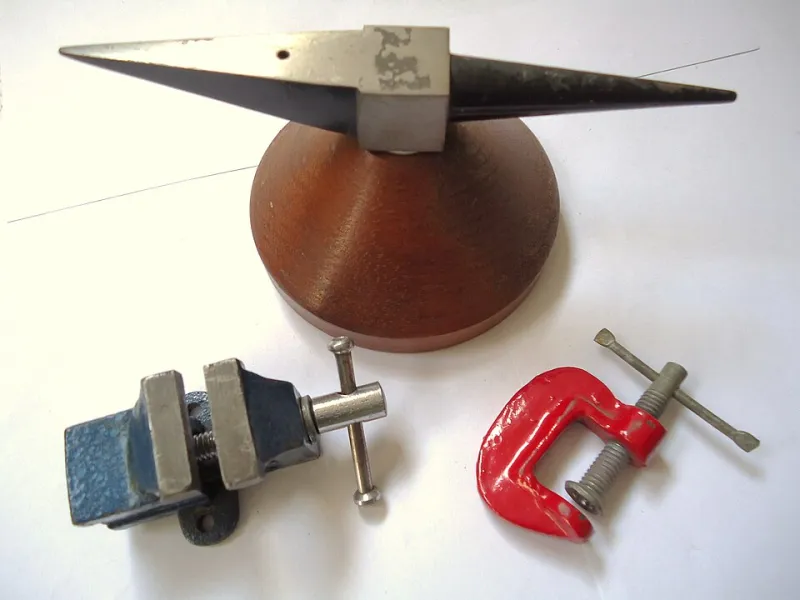
Photo: Mauro Cateb, CC BY-SA 3.0, via Wikimedia Commons
There is a particular quality of light in a British January that flatters almost nothing. It arrives late, leaves early, and in between offers a diffuse, colourless grey that renders polished silver invisible and makes a white diamond look like a piece of glass. Add a wool coat, a cashmere scarf and a radiator set to twenty-two, and you have the true operating conditions of the domestic jewellery wearer for roughly a third of the year.
Most jewellery is not designed for these conditions. It is designed for display cases, for photography, and for a climate that exists in the imagination of a lookbook. But a quiet group of UK designers has begun building around the reality instead — and the results are more interesting than the seasonal collections the market usually serves up in December.
The sleeve problem
Nell Harrow, who runs the six-person studio Harrow & Fen from a bench in Hatton Garden, describes the starting point bluntly. "Half my customers wear a coat eight months a year," she says. "If a bracelet catches on a cuff every time they put an arm through a sleeve, they stop wearing it, and then it was never really jewellery. It was an ornament in a box."
Her response was structural rather than decorative. Clasps were recessed, so no protruding hook catches on ribbed knit. Bracelets were reweighted so that a piece sits under a cuff rather than pushing against it. Earring posts were shortened, on the reasoning that a stud which presses into the neck under a scarf will be removed by the second hour and lost by the third.
The commercial logic is unglamorous and compelling: wearability is a retention strategy. A piece that survives a commute is a piece that gets recommended.
The snag test nobody publishes
In Glasgow, Iona Marr of Marr Studio has instituted what she calls, with some dryness, the knitwear trial. Every new design is worn for a full working day against a lambswool jumper before it goes into production.
"You learn quickly which settings are hostile," she says. "High claw settings are beautiful and they are a menace. Milgrain is fine. Bezel settings are the most underrated thing in jewellery — they protect the stone, they sit flat, and they never catch. The trade treats bezel as the safe option. I treat it as the intelligent one."
Marr also makes an argument about weight that runs counter to the prevailing taste for substantial gold. "A heavy pendant on a fine chain rotates under a scarf," she says. "It ends up at the wrong angle and stays there. Slightly more chain weight, slightly less pendant mass — that is the fix, and nobody photographs it because you cannot see the problem in a still image."
Designing for four hours of usable daylight
If snagging is the practical problem, light is the aesthetic one. Tobias Rye, who works from a shared bench in Birmingham's Jewellery Quarter, has spent three years refining surface finishes specifically for overcast conditions.
"Polished white metal is a mirror," he explains. "In strong sun that is spectacular. Under a grey sky it reflects grey. A brushed or hammered surface breaks the light into smaller pieces, so it always returns something. That is why warm gold with texture reads across a room in February and bright platinum reads as nothing."
This is not a new idea in silversmithing — it is essentially the logic of a mokume surface or a hand-raised vessel — but applied to everyday fine jewellery it produces a distinct look: softer, warmer, less assertive, better in low light. On a practical level, it also hides the micro-scratches that accumulate on any piece worn daily, which means fewer returns and fewer repairs.
The heat question
Central heating is the under-acknowledged villain of the British jewellery wardrobe. Indoor humidity in winter drops sharply, skin tightens, and rings that fitted comfortably in September begin to turn freely in January. Fingers swell in summer and shrink in cold, dry air, and a ring sized in June can be genuinely at risk by December.
Rye's answer is a sizing policy rather than a design one: he now advises customers to be fitted in winter, and offers one free resize within two years. Harrow has gone further, moving a portion of her ring production to a hinged or split shank, which allows a tolerance of roughly half a size without visible compromise. Neither is a marketing story. Both solve a problem that generates quiet dissatisfaction every year.
The case against 'seasonless'
The industry's favourite word is seasonless, and it deserves rather more scepticism than it receives. The concept is appealing because it flatters the buyer — one piece, all year, no decisions — and because it spares brands the cost of designing twice. But a piece that works in July and in January is, in practice, a piece designed for a climate that does not exist in either month.
The alternative is not a return to rigid seasonal drops. It is a middle position: pieces built with a winter tolerance and a summer tolerance, and designed to be honest about it. A cuff that sits over a shirt cuff is a different object from one that sits on bare skin. A chain long enough to fall below a crew neck is doing different work in December than in June. Recognising this is not a limitation on design; it is a brief.
"Seasonless is a supply-chain word, not a design word," Marr says. "I make pieces that work in a Scottish winter. They happen to work in summer too, because I have not built them around a single temperature. That is different from pretending the seasons do not happen."
What to actually buy, November to February
The pieces below are UK-made or UK-based, chosen for flush settings, low snag risk and warm surface finishes.
- Bezel-set studs in recycled 18-carat yellow gold — the single most useful winter purchase, since they survive scarves, hats and headphones.
- A close-fitting huggie rather than a drop earring; nothing to swing into a collar.
- A brushed-gold cuff sized to sit over a fine knit sleeve rather than under it.
- A 45cm chain with a light pendant, long enough to clear a crew neck and short enough not to tangle in a scarf.
- A flat-profile signet or band worn on the little finger, clear of gloves.
- A hinged or split-shank ring for anyone whose hands change size with the weather.
The through-line is unromantic and correct: winter jewellery is a question of engineering before it is a question of taste. The studios getting it right are not the ones making the loudest claims about craftsmanship. They are the ones who wore the prototype against a jumper for a day and then changed the clasp.