A Second Address: Why the Handbag Handle Has Become Britain’s Quietest Jewellery Setting
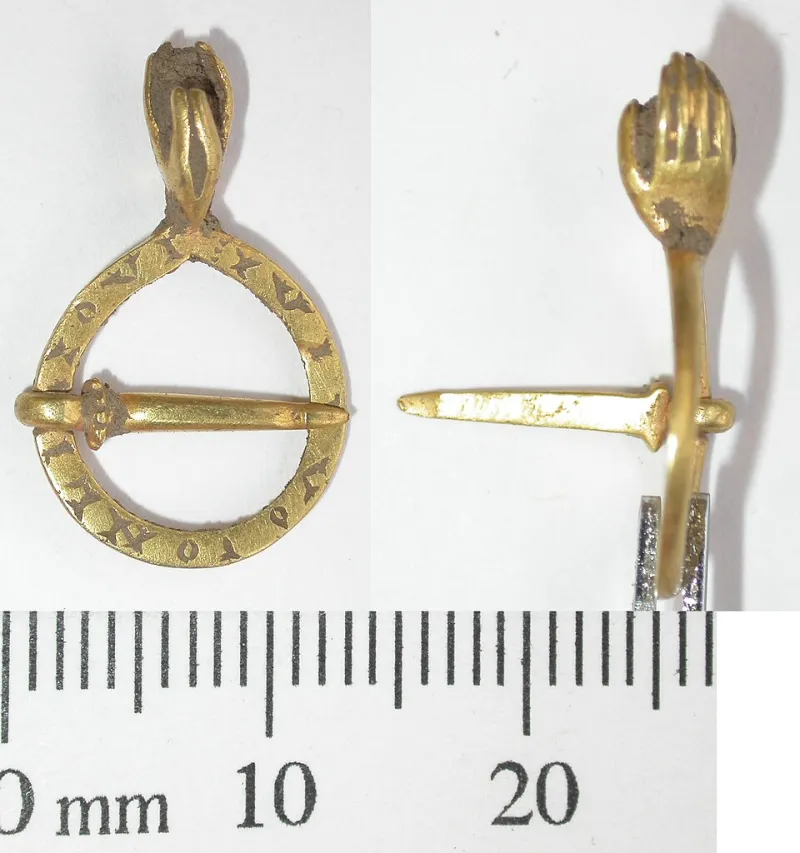
Photo: Derby Museums Trust, Rachel Atherton, 2006-03-10 16:55:01, CC BY-SA 4.0, via Wikimedia Commons
The lapel has enjoyed a long and profitable run. It has carried pins, studs and the occasional sculptural folly, and it has done so with a certain British restraint. But watch a room in November — a restaurant in Marylebone, a gallery private view off Jermyn Street, the 07:42 from Oxford — and the interest has shifted a foot or so lower and rather more to the left. It has moved to the handle of a handbag.
This is not the charm-cluttered bag of an earlier era, hung with souvenirs until it rattled. It is something quieter: a single jewelled clip at the base of a strap, a small gold brooch passed through a knotted silk scarf, a detachable charm on a D-ring that was always there and never used. It is jewellery worn off the body, and it is arguably the most interesting thing happening in British accessorising this winter.
A Different Kind of Display
Jewellery worn on the person has to answer to the face. It sits under a jawline, beside an ear, above a collarbone, and it is judged in the mirror before it ever leaves the house. A piece placed on a bag answers to no such authority. It is seen in motion — in the hand, against a glove, at the moment a card is paid or a door is pulled — and it is seen at close range, repeatedly, by the person carrying it.
That is the real appeal. It is a private pleasure rather than a public declaration, which suits the current mood in British luxury rather better than another statement brooch on a coat that will spend most of the evening on the back of a chair.
It also solves a practical problem. Many considered buyers already own the pieces required: an inherited bar brooch too small for a lapel, a single earring whose partner has gone missing, a charm from a bracelet that is no longer worn. The handle gives these objects a second address.
Proportion Is the Whole Argument
The handle is not an empty surface. It already has a voice: the stitching, the edge paint, the weight of the clasp, the colour of the leather. Anything added must be clearly subordinate to that.
As a working rule, a piece of roughly fifteen to twenty-five millimetres reads as deliberate. Below that it disappears; above it, the bag begins to look decorated rather than dressed. Weight matters as much as width. A heavy brooch on a slender rolled handle will drag the leather, and over a season or two it will leave a permanent sag at the point where the handle is stitched into the bag — a fault that no amount of conditioning will reverse.
Balance the piece against the hardware it sits beside. If the bag has a large turn-lock, a small jewel will look timid; if the hardware is a slim bar, a correspondingly slim brooch will read as intentional. The eye is looking for a relationship, not a competition.
Metal, and the Question of Plating
Most bag hardware is plated, and plated thinly. Friction between a base-metal brooch and a plated ring will produce a grey smear on the leather within weeks, and it is difficult to remove without lifting the finish underneath.
Where possible, choose solid: nine-carat gold, sterling silver, or a well-made rhodium finish. Consider the colour relationship rather than a strict match. Palladium and silver tones sit comfortably against black, oxblood and deep green leathers; warm gold reads best on tan, chocolate, navy and the softer greys. A deliberate contrast — a silver brooch on a tan bag — is a more sophisticated move than an approximate match that misses.
If the piece must be base metal, introduce a barrier. A ribbon, a folded silk scarf or a small leather tab between jewel and hardware will absorb the abrasion and, usefully, look as though it was always the plan.
The Stone Question, and a British Winter
Rain, wool, grit and wet gloves are the three enemies here. Avoid foil-backed paste, glued settings and any open-backed mount that can trap moisture against the leather. Diamonds, sapphires, rubies and rock crystal are unbothered by a damp November.
Pearls are the exception. They are lovely on a scarf tied to a handle and considerably less lovely on a handle that is gripped with wet hands all afternoon; nacre and abrasion do not coexist well. Similarly, pronged settings are a menace to cashmere, both on the sleeve that brushes the bag and on the scarf beneath it. Closed-back settings, cabochons and flat-mounted stones are kinder to everything they touch.
The One Rule: Never Through the Leather
A brooch pin driven through a handle is a puncture wound. It creates a weak point at a high-stress location, it admits water, and it will be visible on resale. On a bag of any value, this is the single most expensive shortcut available.
Happier alternatives exist. Pass the pin through a scarf or ribbon wrapped around the handle, so the fabric takes the strain and the leather is untouched. Use a clip fitted with rubber pads. Or hang a charm from an existing D-ring with a trigger clasp rated for the weight — most are, but check before trusting a heavy pendant to a light fitting.
From Desk to Dinner
For daytime, one piece and a matte finish is sufficient; a small brushed-metal clip on a work bag looks purposeful without asking for comment. In the evening, remove the scarf, add a second and smaller piece, and let a little polish in. Two is the ceiling. Change the metal rather than the number — a jeweller will tell you that a single well-chosen piece in the right tone outperforms three in the wrong one.
Care, and a Note on Insurance
Remove jewellery from a bag before travel, before prolonged rain, and before the bag goes back into its dust bag for the season. Store the piece separately in a pouch; a loose brooch in a handbag will find the one soft surface in the lining and score it. Check clasps quarterly, particularly on anything hanging.
Finally, check the policy. Household contents cover frequently caps single-item jewellery claims at a level well below what a good brooch now costs, and an item carried daily on a bag is a higher risk than one kept in a drawer. Photograph the piece on the bag, keep the receipt, and if the figure warrants it, name it on the policy.
A handle is, on the face of it, a small place to make a point. But it is a place the hand returns to dozens of times a day, and that is precisely why it works. The most considered gestures in British dressing have always been the ones nobody was asked to notice.