Quiet Carry: Five British Leather Goods Built for Patina, Not Parade
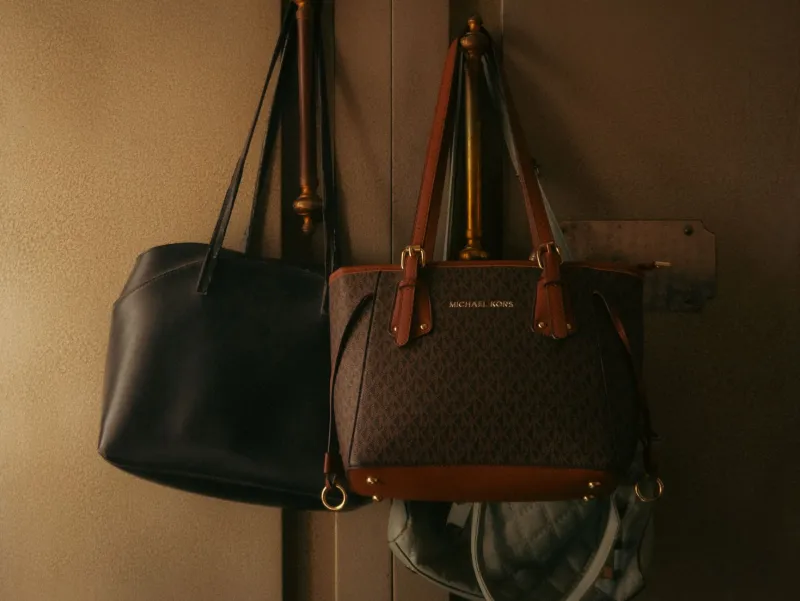
The anti-it bag is less a reaction than a correction. For years, the most visible arm candy in Britain announced itself from across the room: the monogram, the hardware, the seasonal colourway. In 2026, the cooler signal is quieter. It is a bag that looks owned rather than acquired, a card case with softened edges, a tote whose handles have darkened where the hand falls. Patina is the new peacock tail.
At The Ice List, the edit is not about deprivation. It is about direction. British leather goods have long excelled at the kind of understated construction that rewards time: full-grain hides, vegetable-tanned finishes, solid brass, repairable linings and shapes that do not depend on a trend cycle to make sense. The trick is knowing which pieces will age with grace and which will simply look worn out.
Why quiet craft reads as luxury now
There are practical reasons for the shift. Prices have risen across the luxury market, and buyers are more attentive to cost per wear. Resale and repair culture has matured. Sustainability is no longer a sidebar; it is part of the value proposition. A bag that can be re-edged, re-lined and re-stitched is a different proposition from one that is designed to be replaced when the season turns.
There is also a visual argument. Logos date. Leather does not, or at least not in the same way. A well-made British piece acquires a record of use: a shine at the corners, a crease where the flap folds, a honeyed tone on a tan hide that began life pale. That record is difficult to fake and increasingly difficult to buy new. It is why the most interesting carry in London, Edinburgh and Manchester is often the least shouty.
What separates a future heirloom from a trend purchase
Start with the hide. Full-grain leather retains the surface of the animal and will develop character; corrected-grain leather has been sanded and stamped and tends to stay uniform until it fails. Vegetable-tanned leather ages slowly and beautifully, though it can mark. Chrome-tanned leather is often softer and more uniform. Neither is inherently bad, but the finish should suit the object. A structured briefcase needs body; a card case needs a hide that will take a fold without cracking.
Look at the edges. Painted edges can be neat, but a burnished edge, built up in thin layers, is generally easier to maintain and more satisfying to handle. Check the stitching: it should be tight, straight and appropriate to the stress point. Hardware should feel solid rather than plated and hollow. Ask about the lining, the zip and the maker’s repair policy. A good leather goods house will talk about these things without flinching.
Finally, handle the piece. Leather should feel cool and slightly dry rather than plastic-smooth. Press a thumb into the surface; it should crease naturally and recover. Smell it. The best hides smell of tannery rather than chemical dressing. These are not guarantees, but they are useful filters.
Five pieces to consider
1. The slim card case by Ettinger
Ettinger is a reliable entry point into British-made small leather goods, and its slim card cases are the sort of thing that disappears into a jacket pocket and quietly gets better. Look for a simple construction, skived edges and a lining that will not peel. In bridle or calf, the case will take on a soft sheen at the corners within months. It is also the least intimidating way to test a maker before committing to a bag.
2. The working tote by Bill Amberg
Bill Amberg’s studio has long understood that leather is a material for use, not vitrine display. A vegetable-tanned tote with minimal hardware is the ideal city carry: it holds a laptop, a folded umbrella and the miscellany of a working day, and it improves as it does so. Choose a natural or tan finish if you want visible patina; choose a darker brown if you prefer a more discreet ageing process.
3. The structured attaché by Tanner Krolle
Tanner Krolle’s heritage is in cases that mean business without announcing it. A slim attaché or folio in a firm calf is a useful antidote to the soft, slouchy bag: it holds its shape, protects papers and looks better once the handle has darkened. Check the lock, the corner reinforcements and the internal pockets. This is the kind of piece that can be repaired rather than replaced.
4. The weekend holdall by Bennett Winch
For those who need a bag that can take a train platform, a car boot and a hotel corridor without complaint, Bennett Winch’s canvas-and-leather holdalls are a sensible British option. The leather trim will scuff and soften; the canvas will fade. That is the point. Look for solid hardware, a substantial zip and a lining that can be cleaned. A holdall should look better after ten weekends, not ten minutes.
5. The compact purse by Launer
Launer remains one of the quieter names in British leather, which is precisely its appeal. A small purse or card wallet in a classic calf is the sort of piece that lives in a handbag and emerges years later with softened seams and a pleasing gloss. Avoid overly complicated interiors; the best small leather goods are simple, well-edged and easy to repair.
How to buy well, and once
The most sustainable purchase is often the one you do not need to repeat. Buy the shape you will actually use, not the one that photographs best. Ask about the tannery and the country of manufacture. Check whether the maker offers repairs. Consider pre-owned examples from reputable dealers, especially for structured bags where the savings can be substantial. And resist the urge to protect a piece so thoroughly that it never develops a life.
A logo can be bought in an afternoon. Patina cannot. That is the quiet luxury of British leather goods in 2026: the longer you carry them, the less they look like a purchase and the more they look like yours.