Contrast, Not Carats: Fifteen UK Jewellery Pieces for the 2026 Party Season
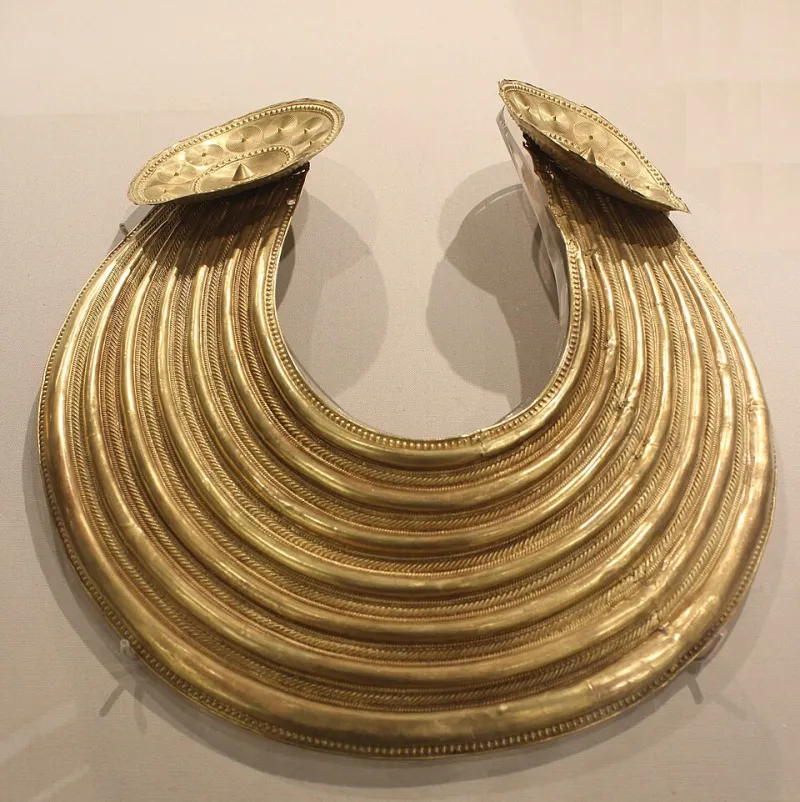
Photo: Martinvl, CC BY-SA 4.0, via Wikimedia Commons
Party season arrives this year with a revised set of instructions. For much of the past decade the December brief was simply more — more carats, more height, more flash — and the results tended to look best at 11pm under a hot downlight and considerably less persuasive at 8pm in a taxi. The 2026 mood is quieter and, frankly, more interesting. The pieces being pulled from drawers this month are chosen for how they behave against cloth: how a burnished gold hoop catches a bottle-green velvet shoulder, how a single diamond line vanishes beneath a cashmere cuff and reappears when the arm lifts to take a glass.
That is the edit below. Fifteen pieces, three price tiers, one governing principle: contrast over carats. Prices are indicative and move with metal and stone markets — confirm with the retailer before you commit.
Why the brief has changed
Three things have converged. First, the return of texture in evening dressing: velvet, brushed wool, heavy satin, all of which swallow a bright white diamond and flatter a warmer, more sculptural metal. Second, the general migration of Party Season from the marquee to the restaurant — shorter evenings, longer tables, jewellery that has to survive a coat check and a taxi rank. Third, and least discussed, a genuine shift in what buyers consider a credential. A well-made piece in recycled gold now carries more quiet status than a larger stone of uncertain origin, and designers have responded by putting the budget into the making rather than the mass.
Under £500: the high-street fine tier
The entry point into real gold has never been stronger in the UK, provided you read the small print — vermeil and plating have their place, but for pieces intended to be worn weekly for a decade, solid gold or a thick vermeil over sterling is the sensible floor.
- Otiumberg — a small, slightly irregular gold hoop in recycled metal. The irregularity is the point: it reads as light rather than as a circle.
- Edge of Ember — a pair of lab-grown diamond studs set low in the lobe. Nothing to snag, nothing to remove before a haircut.
- Missoma — a chunky huggie in gold vermeil, the sort of piece that works under a polo neck as convincingly as above a slip dress.
- Dinny Hall — a fine chain with a small, hand-finished pendant. The chain gauge matters more than the charm; look for something that sits flat against skin.
- Astley Clarke — a single freshwater pearl drop, deliberately off-round. Against black velvet it is far more interesting than a perfectly spherical stone.
£500 to £2,500: where the season is actually decided
This is the band most readers will shop, and it is where British independent design is strongest — small studios, Hatton Garden and Birmingham benches, short runs.
- Alighieri — a textured, deliberately uneven gold pendant. Worn over fine knit, the surface catches what little light there is.
- Completedworks — a sculptural cuff with a softened edge. The proportions are generous; the weight is not.
- Rachel Boston — a diamond huggie with a milgrain detail that reads as antique at distance and modern up close.
- Annoushka — a small talisman charm on a fine chain, easily layered and easily removed for dinner.
- Jessie Thomas — a slim gold signet, engraved or left plain. Worn on the little finger with a velvet sleeve, it is the most quietly confident thing in the room.
£2,500 and above: heritage, worn lightly
The established houses have spent two years reissuing archive pieces in lighter weights, and the result suits the current mood far better than the statement suites of the 2010s.
- Boodles — a diamond line bracelet, set close to the wrist so it disappears under a sleeve and reappears as a single drawn line.
- Garrard — pearl and diamond earrings with a deliberately low drop.
- Mappin & Webb — diamond studs of restrained size and excellent make.
- Asprey — a heavyweight gold chain, worn alone. One piece, no layering.
- Shaun Leane — a sculptural cuff in brushed gold, the sort of object that makes a plain black dress look considered rather than default.
Styling notes: the three fabrics that matter
Velvet. Velvet absorbs light and flattens sparkle, so choose texture over size: brushed, hammered or satin-finished gold will register where a bright white stone will not.
Fine knitwear. Cashmere and merino are the season's snagging hazard. Smooth settings, closed backs and low-profile claws are practical rather than prim — and huggies beat hoops under a scarf.
Black tie. The current instinct is a bare neck and a single drop, or a high neckline and one earring. Both work. What no longer works is a full parure worn with a modern dress.
Sidebar: the new credentials
Lab-grown diamonds and recycled gold have moved from novelty to expectation in the UK market, particularly in the under-£1,500 band. London studios including Kimaï, Lark & Berry and Vashi have built their offer around grown stones, and the price gap against mined equivalents has narrowed to the point where buyers are choosing on design rather than budget. Certification matters: look for a named grading report and, for gold, an explicit recycled or Fairmined declaration on the product page rather than a badge in the footer.
One honest caveat. Lab-grown stones have limited resale value compared with mined diamonds, so buy them as you would buy a good coat — for wearing, not for holding. On that measure, the case is strong: identical optics, a fraction of the capital tied up, and a supply chain most buyers can explain to a sceptical relative over lunch.
The takeaway
Buy fewer pieces, buy them warmer in tone, and buy them for the clothes already in the wardrobe. The 2026 party season does not require maximum sparkle. It requires a piece that behaves well in a room with the lights turned down — which, on the evidence, is a considerably more grown-up idea of ice.