The Stone Without a History: What Lab-Grown Diamonds Really Cost British Buyers
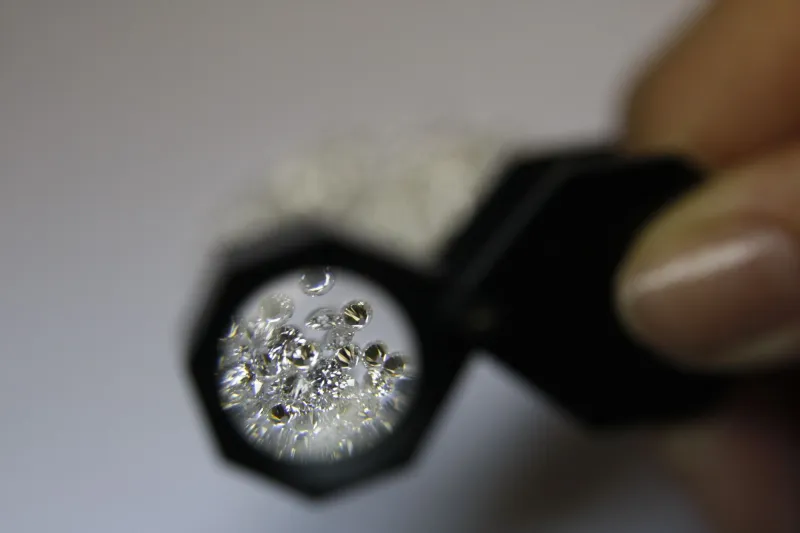
Five years ago, a laboratory-grown diamond in a British jeweller's window was a talking point. Today it is a line item. Multiple retailers stock them, online specialists sell them with next-day delivery, and the major auction houses and resale platforms have had to write policies for them. The argument about whether they are real diamonds is over — they are, chemically and optically, and the trade accepts as much. The argument that remains is a commercial one, and British buyers are, on the whole, having it badly informed.
What has actually changed
The stones themselves are not new; what is new is the volume and the price. Production capacity has expanded sharply and wholesale prices have fallen by an order of magnitude from their early peak. Retail pricing has followed, unevenly. A one-carat laboratory-grown stone that would have carried a four-figure premium a few years ago now sits at a fraction of the equivalent natural price, and the gap continues to widen rather than settle.
This is not a scandal. It is a market maturing quickly in public. But it does mean that the usual intuitions a buyer brings to jewellery — that the object will hold some proportion of its value, that the price is anchored to something — do not apply in the way they once did.
The three questions to ask before you commit
What is the price per carat, and against what comparator? Any reputable seller should be able to quote a per-carat figure and explain the basis for it. If the answer is framed entirely as a saving against natural diamonds, ask for the absolute price and the specification. Savings framing is marketing; per-carat pricing is information.
What exactly am I buying? Laboratory-grown diamonds can be produced by two distinct methods, and can be treated after growth. Ask whether the stone has been post-growth treated, and whether the metal is solid gold or plated. A UK hallmark on the mount tells you about the metal, not the stone.
What is included in the quoted price? Setting, sizing, engraving and VAT should be itemised. Several online sellers quote stone prices that look remarkable until the mount and the making charge appear at checkout.
Certification: what the paperwork proves and what it does not
A laboratory-grown stone of any consequence should arrive with an independent grading report — from the International Gemological Institute, GIA or an equivalent laboratory. The report will state the four Cs and, critically, will identify the stone as laboratory-grown in its nomenclature. Anything described as a 'cultured' or 'created' diamond without a report is a question mark, not a bargain.
Ask for the report number and verify it directly with the laboratory. Reports can be copied; the laboratory's own database cannot. Check also whether the girdle is laser-inscribed and whether the inscription matches the report.
One caution that catches people out: a grading report is a description, not a valuation. It says nothing about what the piece is worth second-hand, and it is not a substitute for insurance documentation. For that you need a separate valuation from a qualified valuer, and a policy that names the item.
The resale question, answered honestly
This is where the conversation turns uncomfortable. Fine jewellery retail has always been a poor economic proposition on resale — a natural diamond bought at retail will typically realise considerably less than its purchase price on the secondary market. Laboratory-grown stones sit at a further disadvantage, because the replacement cost keeps falling. A jeweller who buys back a stone is competing with a wholesale market that may be cheaper next year than last.
In practice, that means most British jewellers will not purchase laboratory-grown stones outright, and general resale platforms accept them only with full disclosure and often at steep discounts. Auction houses will handle them, but selectively and with realistic estimates. If a seller lists the piece without stating it is laboratory-grown, the sale is likely to be unwound.
The honest conclusion is straightforward: buy a laboratory-grown diamond as a designed object you intend to wear, not as a store of value. Buy natural, or buy vintage, if capital preservation is the point.
Why some jewellers refuse, and others lean in
Among independent British jewellers, opinion divides sharply. Those who decline give practical reasons — no secondary market to support their clients, difficulty insuring at replacement cost, and the discomfort of selling a stone whose price may halve while it sits in the window. Some add a softer argument about provenance and meaning, which is a legitimate preference rather than a technical objection.
Those who embrace the category tend to do so for two reasons. The first is design freedom: at a given budget, a larger and more interesting stone becomes possible, and that suits the current appetite for sculptural, generous settings. The second is traceability. A stone with a documented origin story answers a real concern among younger buyers, although it is worth noting that claims about energy use and carbon neutrality vary widely and should be read as claims, not guarantees.
A sensible position for 2026
Treat the purchase as you would any other piece of contemporary design: decide what you will pay for the object, not the commodity. Insure it for replacement, which will be cheaper than you expect and may need revisiting annually. Keep the report and the invoice. Disclose the stone openly if you ever sell, and expect the number to be modest.
Laboratory-grown diamonds have made good jewellery affordable at a scale that was not possible a decade ago. That is a genuine gain. It is only a bad deal when it is sold as something it is not.