The Layer Ledger: Seven British Pieces for a Winter Spent Mostly Indoors

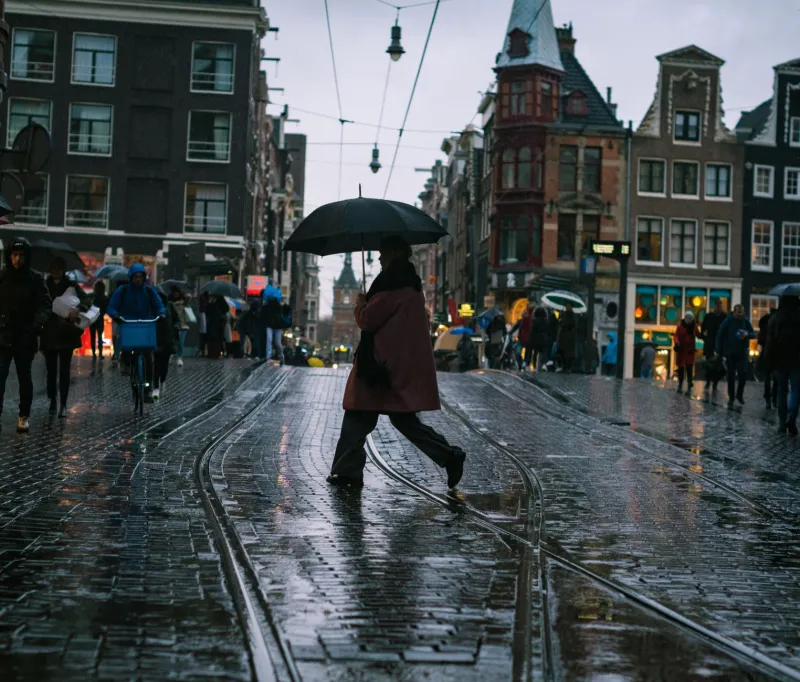
British winter is not really an outdoors season. It is a series of brief, bracing exposures — the walk to the station, the wait for a bus running late, the crossing of a car park — separated by long stretches in overheated offices, warm pubs and homes where the thermostat is a matter of household politics. Dressing for it in a down-filled jacket is a category error, and it is the reason so many people spend January carrying a coat they cannot bear to wear indoors and cannot comfortably remove.
The answer is not more insulation. It is better layering: pieces light enough to be worn at a desk, structured enough to be seen on their own, and warm enough to do the work on the four minutes when it matters.
The Brief
Three conditions. Each layer must function alone — nothing that only makes sense under something else. Each must be quiet enough for the office and robust enough for a Saturday. And nothing should look as though it has been designed for a ski lodge, which rules out high-volume baffles, technical shells in primary colours and anything with a lift pass in the pocket.
1. The Tailored Wool Overshirt
The most useful piece in a British winter wardrobe is a shirt cut in a mid-weight wool or wool-blend cloth, with a collar that holds its shape and a straight hem long enough to sit below a knit. Look to the mill towns and the small makers who buy from them; the cloth is where the quality lives, and a tight, slightly dry wool handle will resist creasing through a working day. Worn open over a fine knit it behaves like a soft jacket; buttoned under a coat it adds a genuine layer of warmth without adding bulk.
2. The Quilted Liner
Quilting done properly — narrow channels, a slim shoulder, a light wadding — is the closest thing to a cheat in winter dressing. A liner jacket in navy or olive slips under a wool overcoat and replaces a heavy sweater, or stands in for a coat on a mild, dry day. Keep the quilting close and the fit sharp at the shoulder; loose, wide-channel quilting is what tips the garment towards outdoor equipment.
3. The Fine-Gauge Knit
The foundation layer, and the one worth spending on. A fine-gauge merino or cashmere crew neck at 12 or 14 gauge adds warmth with almost no volume, sits flat under a jacket and can be worn against the skin. Scottish spinners have been supplying this yarn for decades and the difference between a good fine-gauge knit and a cheap one is evident within a month: the cheap version pills at the cuffs and loses its shape at the neck. Buy two colours — a dark neutral and an oatmeal — and wear them hard.
4. The Lambswool Cardigan
The cardigan has recovered its standing, and the version that works is brushed, boxy and slightly old-fashioned: lambswool or a lambswool blend, horn or corozo buttons, a ribbed hem that sits at the hip. It is the layer that makes an overheated office tolerable, because it comes off without disturbing the shirt underneath. Worn buttoned with tailored trousers it reads as a soft jacket; worn open over a tee at the weekend it does the other half of the job.
5. The Brushed Cotton Shirt
An underrated middle layer. Brushed cotton or needlecord in a muted check or a solid oatmeal holds warmth far better than poplin, takes a knit over it without straining at the chest, and looks deliberate rather than sporty. The collar should be soft enough to sit under a crew neck without fighting it. This is the piece that carries a weekend — market, lunch, a walk that ends at a pub with a fire.
6. The Scarf and Gloves
Accessories do more of the warming than people credit, and better than a heavier coat. A lambswool or cashmere scarf in a generous width — long enough to loop once and still hang — and a pair of leather gloves with a cashmere lining will see off the walk to the station more effectively than an extra 100 grams of filling. In town, keep the scarf tonal and the gloves dark; contrast here tends to read as sporting rather than considered.
7. The Silver Finish
Layering is a question of edges, and polished metal supplies them. A slim silver chain at the collar of a fine-gauge knit, or a single signet or plain band at the hand, gives a heavy winter palette somewhere to catch the light. Keep it to one or two pieces and keep the scale modest; winter clothing is textural, and jewellery works best here as a small, hard contrast against soft wool.
Styling Notes
The office. Fine-gauge knit, wool overshirt, tailored trousers, no coat indoors. The overshirt comes off before the knit does — that hierarchy is what keeps you comfortable in a room heated for people in short sleeves.
The pub. Lambswool cardigan over a brushed cotton shirt, sleeves pushed back, silver at the wrist. Warm enough for a beer garden at seven and not absurd beside an open fire at nine.
The weekend. Quilted liner over a merino crew, scarf, gloves, chinos or dark denim. Everything here can be removed in stages, which is the entire point.
What to Leave Out
Anything with a baffle wide enough to read as outerwear indoors. Logo-heavy knitwear, which dates faster than any cut. Technical fabrics in the city, unless you are genuinely walking a hill. And the temptation to buy one very heavy coat: in a British winter, three good layers will be worn more often, and more comfortably, than one excellent puffer.