Nine Carats, Considered: Britain’s Everyday Gold Earns a Second Look

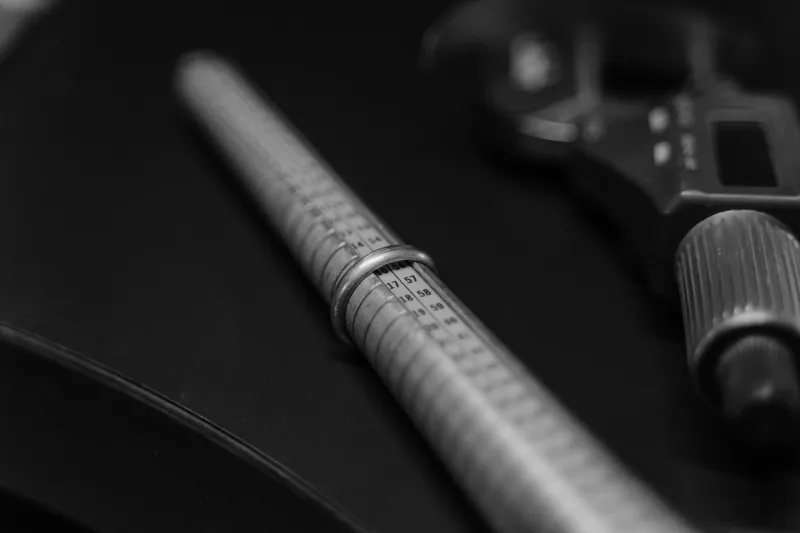
Photo: 9ct gold jewellery close up British jeweller workbench signet ring, via www.bleepstatic.com
In British jewellery, metal purity has often functioned as a kind of shorthand. Eighteen-carat suggests seriousness; twenty-two-carat suggests heritage; nine-carat has too often been filed under budget. In 2026, that shorthand is being tested. Not because 9ct gold has changed — it has not — but because buyers are asking different questions. How often will this be worn? How will it age? Does the design justify the metal? The answers are leading to a quieter, more considered reassessment of Britain’s most ordinary gold.
The legal and material facts
Nine-carat gold is 37.5 per cent gold, hallmarked in the UK as 375. The remainder is alloy — typically silver, copper, zinc or palladium, depending on the colour and working properties the maker requires. This is not a lesser or unofficial category. It is a lawful, assayed standard, and it has been a staple of British jewellery for generations.
The lower gold content has practical consequences. Nine-carat gold is harder than 18ct and therefore more resistant to the knocks and scuffs of daily wear. That makes it especially credible for rings, bracelets and chains — pieces that live on the body rather than in a box. Its colour is also different: less saturated than 18ct, often a little drier and more architectural, whether in pale yellow, warm rose or rhodium-plated white. The old hierarchy was never purely about quality. It was about price, convention and the stories the trade chose to tell.
Why designers are reaching for it
The most convincing argument for 9ct in 2026 is not economic. It is formal. Because the metal is less costly, designers can use more of it. That means broader signet faces, heavier curb links, sculptural ear cuffs and hinged bangles that would be prohibitive in 18ct. It also means more experimentation with matte finishes, hand-engraving and mixed-metal construction.
A number of British studios are now using 9ct not as a hidden compromise but as a deliberate drawing material. The metal allows volume without fragility, and scale without pretence. A chunky 9ct chain does not need to apologise for itself; it simply needs to be well made. The best pieces tend to treat 9ct as its own category, rather than as an imitation of something richer.
Colour, character and the question of warmth
Nine-carat gold has a distinct palette. It can look slightly more restrained than 18ct, which some buyers read as less luxurious and others read as more modern. In yellow gold, the tone is often warmer and less buttery; in rose gold, the copper alloy can give a softer blush; in white gold, rhodium plating provides the bright finish, though it will need replating over time.
This is where design-led buying matters. A piece in 9ct should be chosen for how it looks and wears, not for what it approximates. The metal has a slightly firmer, more tool-like character that suits signets, bold chains, cufflinks and talismanic pendants. It can also provide a sensible counterweight to stones, allowing colour to lead rather than compete with the metal.
Resale realities
The case for 9ct collapses if it is mistaken for an investment. Its intrinsic value is lower than 18ct, and resale is usually based on weight and the prevailing gold price rather than on design or making. A buyer who expects 18ct-style retention will be disappointed. That is not a flaw in the metal; it is a category fact.
For British buyers, the sensible approach is to separate wear value from resale value. If the primary aim is to hold value, 18ct or well-documented antique pieces may make more sense. If the aim is a well-designed piece that can be worn hard and often, 9ct can be entirely rational. The mistake is to pay 18ct prices for 9ct metal, or to expect 18ct returns from a 9ct purchase. Transparent pricing, clear hallmarks and a maker’s willingness to discuss weight and construction are more useful than carat snobbery.
What to look for
Start with the hallmark. A UK 9ct piece should carry the 375 mark and an assay office mark, alongside the maker’s mark where applicable. Check whether the piece is solid or hollow: hollow construction can give impressive volume, but it dents more easily and should be priced accordingly. Look at clasps, hinges and settings, since these are where daily-wear pieces succeed or fail.
White 9ct gold will usually be rhodium-plated, so ask about maintenance. Buyers with sensitive skin should ask about alloy composition rather than assuming all 9ct is the same. And consider the design brief: 9ct is at its best where hardness and scale are advantages — rings, bracelets, chains and sculptural pieces — rather than in very fine work where another alloy might serve better.
The 2026 case
This is not a conversion narrative. Nine-carat gold is not replacing 18ct, nor should it. It is simply being chosen on purpose. In a market where gold remains expensive and buyers are more attentive to how pieces actually live, the metal’s practicality has become a design argument rather than a compromise. The most convincing 9ct pieces in 2026 are the ones that do not pretend otherwise. They use the metal’s firmness, its warmer colour and its capacity for volume to make jewellery that feels deliberate. Luxury, after all, is not a single carat grade.